Weight Loss Meal Prep Ideas That Actually Keep You Full and Satisfied
Effective weight loss meal prep ideas that focus on nutrient-dense, satisfying food rather than deprivation. Learn how to prep meals that support your goals without making you feel deprived.
Weight loss meal prep done wrong looks like sad salads, bland chicken breast, and a constant undercurrent of deprivation. Weight loss meal prep done right looks like genuinely satisfying, deeply flavored food that happens to be rich in protein, fiber, and nutrients — and you actually want to eat it. The difference lies in understanding that successful, sustainable fat loss is not about eating as little as possible; it is about eating the right balance of foods that keep you full, nourished, and satisfied while creating a moderate caloric deficit. Meal prep makes this infinitely more achievable by removing daily decision fatigue and ensuring the right food is always ready.
The Nutritional Principles of Weight Loss Meal Prep
Effective weight loss meal prep is built on a few evidence-based nutritional principles that work together to support fat loss while preserving muscle and maintaining energy:
- Prioritize protein: High protein intake (0.7–1g per pound of body weight) supports muscle preservation during weight loss, significantly increases satiety, and has a higher thermic effect than carbohydrates or fat — meaning your body burns more calories digesting it
- Load up on fiber: Fiber-rich foods (vegetables, legumes, whole grains) expand in the stomach, slow digestion, and produce short-chain fatty acids that signal fullness; aim for 25–35 grams daily
- Choose volume-dense foods: Foods with high water content (vegetables, fruits, soups, salads) let you eat a large physical volume of food for relatively few calories — crucial for avoiding hunger
- Limit refined carbohydrates and added sugar: These spike blood sugar rapidly and contribute to hunger cycling; replace with whole grain alternatives and naturally sweet foods
- Do not eliminate fat: Dietary fat is essential for satiety, nutrient absorption, and hormonal function; focus on quality sources (olive oil, avocado, nuts, fatty fish) rather than elimination
High-Volume, Lower-Calorie Foods to Build Prep Around
The secret weapon of weight loss meal prep is volume eating — filling your plate and your stomach with foods that are nutrient-dense but not calorie-dense. These should form the foundation of your prep:
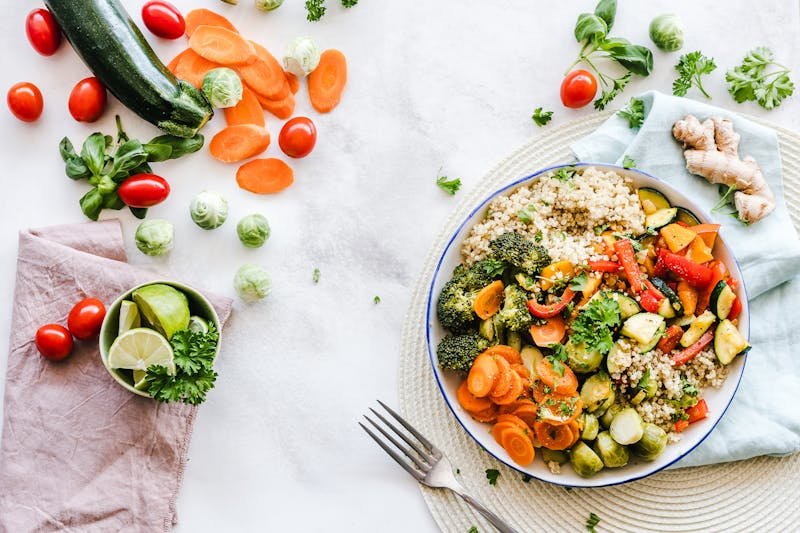
Vegetables of all kinds: Roast enormous quantities — broccoli, cauliflower, Brussels sprouts, zucchini, asparagus, and leafy greens cooked with a drizzle of olive oil provide enormous volume with minimal calories and maximum nutrition. Legumes: Lentils, chickpeas, and black beans provide protein and fiber simultaneously — one cup of cooked lentils delivers 18g protein and 16g fiber for around 230 calories. Lean proteins: Chicken breast, turkey, white fish, shrimp, and egg whites are calorie-efficient protein sources ideal for weight loss. Greek yogurt: 17–20g protein per cup with a relatively low calorie count; use as a base, topping, or sauce component.
Sample Weight Loss Meal Prep Plan
Here is a practical weekly prep plan designed to support a moderate caloric deficit (approximately 1,600–1,800 calories per day for most active adults) while maximizing satisfaction:
Prep session (approximately 2 hours): Bake 6 chicken breasts seasoned with herbs and lemon. Cook a large pot of lentils. Roast two sheet pans of mixed vegetables (broccoli, peppers, zucchini, sweet potato). Hard-boil 8 eggs. Prepare a large salad base (romaine, spinach, cucumber) stored without dressing. Make a batch of homemade vinaigrette. Portion out Greek yogurt with mixed berries for breakfast. Cook a pot of brown rice or quinoa for grain bases.
From these components, build meals throughout the week: big protein salads with chicken, eggs, and copious vegetables; lentil soup with a side of roasted vegetables; grain bowls with a modest portion of grain, plenty of roasted vegetables, chicken, and yogurt-based dressing.
Making It Sustainable: The Mindset Shift
The most important element of weight loss meal prep is not the specific recipes but the mindset: food should be satisfying and pleasurable, not punishing. Eating well in support of fat loss should feel like caring for yourself, not restricting yourself. This means cooking food you genuinely enjoy, seasoning generously, using good olive oil, eating plenty of vegetables prepared in ways that make them delicious (roasted until caramelized, dressed with good vinegar and herbs), and allowing flexibility in your plan rather than demanding rigid perfection.
Sustainable weight loss is built on consistency over many months, not perfection over a few weeks. Meal prep supports consistency by making the healthy choice the easy choice — and that is ultimately its greatest gift.